- (904) 746-0050
- info@devorecapital.com
- 8:30 AM - 5 PM Monday - Friday
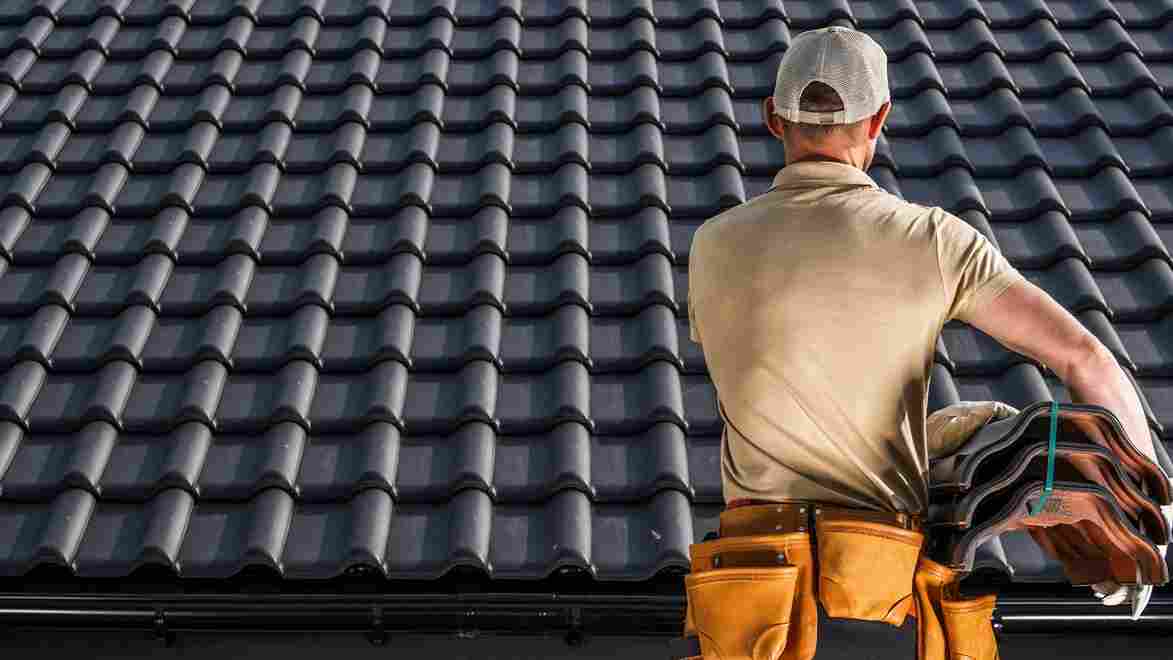
A roof replacement is one of the largest single investments a homeowner makes, and in Jacksonville, FL, it is a decision with real stakes. Northeast Florida’s subtropical climate, annual hurricane season, and high UV exposure mean a poorly installed roof does not fail gradually. It fails under pressure, during the exact storm conditions the roof was supposed to protect against. Choosing the wrong residential roofing contractor does not just cost money. It costs your home’s protection at the worst possible moment.
Choosing the right residential roofing contractor in Jacksonville comes down to verifying a handful of non-negotiable qualifications: a valid Florida contractor license, current liability and workers’ compensation insurance, manufacturer certification, documented local experience, and a written warranty that covers both materials and workmanship. Every other factor — price, timeline, product selection — matters far less than getting those five things right.
This guide walks Jacksonville homeowners through every step of choosing a residential roofing contractor in 2026, from the first call through the final inspection, so the decision is made with confidence rather than guesswork.
This guide is written for homeowners in Jacksonville and across Northeast Florida who are facing a roof replacement or major repair and want a practical, step-by-step framework for selecting the right contractor. Devore Capital Roofing serves residential clients throughout the region and has worked with homeowners at every stage of the contractor selection process, from the first inspection through post-storm insurance claims. Topics covered include the licensing and insurance requirements specific to Florida, how manufacturer certification affects your warranty coverage, what red flags to watch for in contractor proposals, how to evaluate competing bids accurately, and the specific questions every Jacksonville homeowner should ask before signing a roofing contract.
Florida has specific licensing requirements for roofing contractors, and verifying those qualifications before hiring anyone is the most important protective step a homeowner in Jacksonville can take. Devore Capital Roofing holds the required Florida contractor credentials and carries full liability and workers’ compensation insurance for every residential project across Duval and surrounding counties.
Florida roofing contractor license. Florida requires roofing contractors to hold a state-issued license, either a Certified Roofing Contractor license issued by the Florida Department of Business and Professional Regulation (DBPR), or a Registered Roofing Contractor license that restricts work to specific counties. Homeowners can verify any contractor’s license status in minutes at the DBPR online lookup portal by searching the contractor’s name or license number. If a contractor cannot provide a license number or their number does not return an active, valid result, do not hire them. Unlicensed roofing work in Florida is not only a code violation but it voids most homeowners insurance coverage for work performed on the property.
Liability insurance. A residential roofing contractor must carry general liability insurance that covers property damage caused during the project. Ask for a certificate of insurance before any work begins and confirm that your property is named as an additional insured on the policy for the duration of the project. If a contractor’s crew damages a skylight, a gutter, or a vehicle in the driveway during installation and the contractor carries no liability coverage, that cost falls to the homeowner.
Workers’ compensation insurance. Florida law requires roofing contractors to carry workers’ compensation coverage for all employees and subcontractors working on a job site. If a roofer is injured on your property and the contractor does not carry workers’ comp, the homeowner can face a civil liability claim. Ask for proof of workers’ compensation coverage alongside the liability certificate and verify both are current before work begins.
Manufacturer certification. Beyond state licensing, manufacturer certification programs like GAF’s Master Elite and certified contractor designations indicate that a contractor has met training and installation standards set by the product manufacturer. GAF certification is particularly relevant for Jacksonville homeowners because it determines which warranty tiers are available on the roofing system. A GAF-certified contractor can offer the GAF System Plus Limited Warranty and Silver Pledge Limited Warranty, which include workmanship coverage that standard installation warranties do not provide. An uncertified contractor can install GAF shingles but cannot activate those premium warranty tiers.
Getting multiple written estimates is a standard recommendation for any major home improvement project, but evaluating those estimates accurately requires knowing what to look for beyond the bottom-line number. Three licensed, insured roofing contractors submitting proposals for the same Jacksonville home can produce bids that vary by thousands of dollars, and the differences almost never reflect identical scopes of work.
Request itemized proposals. A professional roofing estimate should break out material costs, labor costs, tear-off and disposal fees, permit costs, underlayment specifications, and any additional work required before installation, such as deck repair or flashing replacement. A single-line total with no breakdown gives you no basis for comparison and no protection if the scope is disputed after the project begins.
Compare material specifications, not just brands. Two proposals that both list GAF Timberline shingles may specify different underlayment products, different fastening patterns, and different flashing materials. The shingle product is the same, but the system being installed is not. A proposal that uses a synthetic high-performance underlayment and stainless steel flashing will outperform and outlast a proposal using standard felt and galvanized components over the decades of Florida’s heat and humidity.
Understand what is and is not included in tear-off. Full tear-off of the existing roofing layers, inspection and repair of the deck below, and proper disposal of the removed material should be standard on any residential replacement proposal in Jacksonville. Some contractors omit deck inspection and repair from their base price and present it as a change-order item after the project is underway. Ask directly whether the proposal covers deck repair if damage is found, and get the answer and the pricing in writing before signing.
Evaluate the warranty structure on each proposal. Compare the material warranty provided by the shingle manufacturer and the workmanship warranty provided by the contractor side by side. A proposal that carries a 50-year limited material warranty but no workmanship warranty leaves the homeowner without coverage for installation errors. The workmanship warranty is what holds the contractor accountable after the job is complete.
Be skeptical of the lowest bid. In the Jacksonville roofing market, as in most regional markets, a bid that comes in significantly below the others almost always reflects a compromise somewhere: lighter-weight shingles, thinner underlayment, fewer fasteners per shingle, or subcontracted labor on piece-rate pricing that incentivizes speed over precision. A roof installed quickly and inexpensively in Nocatee or Ponte Vedra that fails in its fourth year costs far more in total than a roof installed correctly at a higher initial price.
Northeast Florida’s storm season generates a predictable pattern of contractor activity that every Jacksonville homeowner should be aware of. After a significant hurricane or tropical storm passes through the region, a wave of out-of-state and unlicensed roofing contractors arrives to pursue insurance-related repair work. These contractors, sometimes called storm chasers, move quickly through neighborhoods, offer low prices and fast start dates, and frequently disappear before warranty claims can be honored.
Unsolicited door-to-door solicitation. A contractor who knocks on your door immediately after a storm and offers to get on your roof for a free inspection that same afternoon is almost never the right choice for a project of this scale. Established local roofing contractors in Jacksonville have full project schedules and do not need to solicit work door-to-door. When you are ready to replace or repair your roof, you make the call to a contractor of your choosing rather than responding to one who found your address on a post-storm drive-through.
No local physical address or verifiable business history. Before signing any roofing contract in Jacksonville, verify that the contractor has a physical business address in Northeast Florida, not just a phone number and a website. Search for the business name along with the Florida contractor license number and cross-reference the result with the DBPR lookup. A business that has been operating in the Jacksonville market for multiple years with verifiable completed projects is a meaningfully different risk profile than one that registered a Florida entity three weeks after a hurricane.
Pressure to sign immediately or accept a same-day discount. Reputable roofing contractors in Northeast Florida do not require homeowners to sign contracts at the kitchen table during the first visit. A professional proposal is provided in writing, and the homeowner is given reasonable time to review it, compare it to other estimates, and ask follow-up questions. Any contractor who creates artificial urgency around signing is using a sales tactic, not a legitimate project management timeline.
Requests to sign over insurance benefits. After a storm, some contractors ask homeowners to sign an Assignment of Benefits (AOB) document that transfers the homeowner’s insurance rights to the contractor, who then handles the claim directly with the insurer. Florida law has significantly restricted AOB arrangements in recent years due to widespread abuse. Any contractor who pushes for an AOB arrangement should prompt immediate caution and legal consultation before any signature.
Vague or verbal warranties. A warranty that exists only in a contractor’s verbal assurance is not a warranty. All warranty terms, both for materials and workmanship, must appear in the signed contract. If a contractor is reluctant to put warranty commitments in writing, that reluctance is the answer to how reliable those commitments are.
Asking the right questions before signing a roofing contract is the most direct way to separate qualified contractors from unqualified ones in the Jacksonville market. The following questions produce the information every homeowner needs before making this decision.
Can you provide your Florida roofing contractor license number? The answer should be immediate and verifiable. Follow up by checking the number at the DBPR online portal.
Are you GAF-certified, and what warranty tiers does that certification allow you to offer? This question reveals both the contractor’s manufacturer standing and the quality of warranty coverage available on the project.
Will you pull the required permits for this project? Roof replacements in Jacksonville require building permits under Florida Building Code. A contractor who suggests skipping the permit to save money or time is asking the homeowner to accept the legal and financial liability of unpermitted work.
What does your workers’ compensation and liability coverage look like? Ask for certificates of both, not verbal confirmation. Verify that both policies are current and that coverage extends through the estimated project completion date.
How long has your company been operating in Northeast Florida? Local history matters. A contractor who has been serving Jacksonville and the surrounding counties for multiple years has a track record that can be verified through completed projects, references, and public reviews.
Who will actually perform the installation — your own crew or subcontractors? If subcontractors are used, ask whether they carry their own insurance and whether the contractor supervises their work directly. The quality and accountability of the installation crew directly affects the outcome of the project.
What is the timeline from project start to completion, and what happens if weather delays the schedule? A professional contractor provides a realistic schedule and a clear policy on weather-related delays, which are common in Jacksonville during summer storm season.
The contractor selection decision for a Jacksonville homeowner comes down to one central principle: roofing in Northeast Florida is a specialized skill that requires specific knowledge of the local climate, building codes, and weather patterns that determine how a roof actually performs over decades. A contractor who primarily works in a different region, or who does not have deep experience with the wind uplift requirements, humidity conditions, and hurricane-season demands specific to this market, is not the right choice regardless of price.
A GAF-certified contractor brings manufacturer-validated installation training, access to premium warranty tiers, and accountability to a program that requires ongoing professional standards. For homeowners in Jacksonville, Fernandina Beach, St. Augustine, or anywhere across Northeast Florida, that combination of local expertise and manufacturer-backed certification is the standard against which every contractor proposal should be measured.
Devore Capital Roofing also assists homeowners with insurance claims documentation when storm damage is the trigger for a roof replacement. Getting a thorough post-storm inspection from a licensed contractor before filing a claim, and having that documentation prepared professionally, consistently produces better claim outcomes than filing without it. The inspection, the documentation, and the claims support are services a qualified local contractor provides as part of the professional relationship, not as extras billed separately.
If you are ready to start the process of choosing a residential roofing contractor for your Jacksonville home, the right first step is a professional inspection and a written estimate from a contractor you can verify. Devore Capital Roofing provides free roof inspections and free written estimates for homeowners throughout Duval, St. Johns, Clay, Nassau, Baker, and surrounding counties in Northeast Florida. As a GAF-certified roofing contractor with a documented track record of residential installations across the region, the team brings the licensing, insurance, certification, and local expertise that a roofing decision of this scale deserves. Call (904) 746-0050, visit the office at 233 E Bay St, Ste 912, Jacksonville, FL 32202, or request your inspection at www.devorecapitalroofing.com to get started with no obligation.
Q: How do I choose a residential roofing contractor in Jacksonville, FL?
A: Start by verifying that any contractor you consider holds a valid Florida roofing contractor license, carries current liability and workers’ compensation insurance, and has a verifiable local business history in Northeast Florida. Request written, itemized estimates from at least three licensed contractors, compare the full scope of each proposal rather than just the price, and prioritize contractors who hold manufacturer certification and offer written workmanship warranties alongside the material warranty.
Q: How do I verify a Florida roofing contractor’s license?
A: Florida contractor licenses can be verified through the Florida Department of Business and Professional Regulation (DBPR) online lookup portal. Search by the contractor’s name or license number and confirm the license is active, properly classified for roofing work, and free of disciplinary actions. This verification takes less than five minutes and is the single most important protective step before hiring anyone to work on your roof.
Q: What is the difference between a material warranty and a workmanship warranty on a roof?
A: A material warranty, provided by the shingle manufacturer, covers defects in the roofing products themselves. A workmanship warranty, provided by the installing contractor, covers errors made during installation. Both are necessary for complete protection. A GAF-certified contractor can offer the GAF System Plus Limited Warranty, which covers both materials and workmanship in a single document. Without a workmanship warranty, installation errors discovered after the crew leaves are not covered.
Q: Are storm chasers a real risk for Jacksonville homeowners after a hurricane?
A: Yes. After significant storm events in Northeast Florida, out-of-state and unlicensed contractors routinely arrive in Jacksonville neighborhoods to solicit insurance-related roofing work. These contractors often cannot be held accountable for failed workmanship because they have no local presence after the project is complete. Homeowners should always verify Florida contractor licensing and local business history before signing any roofing contract following a storm.
Q: Should I get multiple estimates for a roof replacement in Jacksonville?
A: Yes. Getting at least three written, itemized estimates from licensed local contractors is the most reliable way to evaluate proposals accurately. Compare the full scope of each proposal, including underlayment specifications, fastening patterns, tear-off and disposal procedures, warranty terms, and permit inclusion, rather than comparing only the bottom-line price. Significant price differences between proposals almost always reflect differences in scope or material quality.
Q: What permits are required for a roof replacement in Jacksonville, FL?
A: A building permit is required for roof replacements in Jacksonville under Florida Building Code. The permit process ensures the installation is inspected for compliance with Florida’s wind-uplift resistance requirements, which are particularly important in Duval County’s coastal and near-coastal zones. A licensed contractor pulls the permit as a standard part of the project. Any contractor who suggests skipping the permit is creating legal and financial risk for the homeowner.
Q: How do I know if a roofing contractor is GAF-certified in Jacksonville?
A: You can ask the contractor directly for their GAF certification documentation and verify it through GAF’s contractor locator at gaf.com. GAF-certified contractors are held to manufacturer training and installation standards and can offer premium warranty tiers, including the GAF System Plus Limited Warranty and Silver Pledge Limited Warranty, that uncertified contractors cannot provide. Devore Capital Roofing holds GAF certification and can document that standing for any homeowner who requests it.
Q: When is the best time of year to replace a roof in Jacksonville, FL?
A: The late fall and winter months, from October through February, are generally the most favorable for roof replacement in Jacksonville because they fall outside the peak of hurricane season and offer more consistent weather conditions for installation. That said, roofing can be performed year-round in Northeast Florida, and a roof that needs immediate attention should not wait for an optimal season. A licensed roofing contractor monitors weather conditions and schedules installation to avoid active rain events regardless of the time of year.
Choosing a residential roofing contractor in Jacksonville in 2026 is not a decision that benefits from rushing or from defaulting to the lowest available price. The roof over your home in Northeast Florida is tested by real conditions, year after year, and the contractor who installs it either prepares it for those conditions or does not. Getting that decision right at the outset is the only version of this story that does not include an expensive follow-up.
The framework in this guide, verify licensing and insurance, confirm manufacturer certification, compare full proposal scopes rather than just prices, watch for established red flags, and ask the right questions before signing, gives Jacksonville homeowners a clear and reliable path to choosing a contractor they can trust. A licensed, GAF-certified roofing contractor with a proven local track record in Northeast Florida is not a premium option. It is the baseline standard that every homeowner’s roof replacement deserves.