- (904) 746-0050
- info@devorecapital.com
- 8:30 AM - 5 PM Monday - Friday

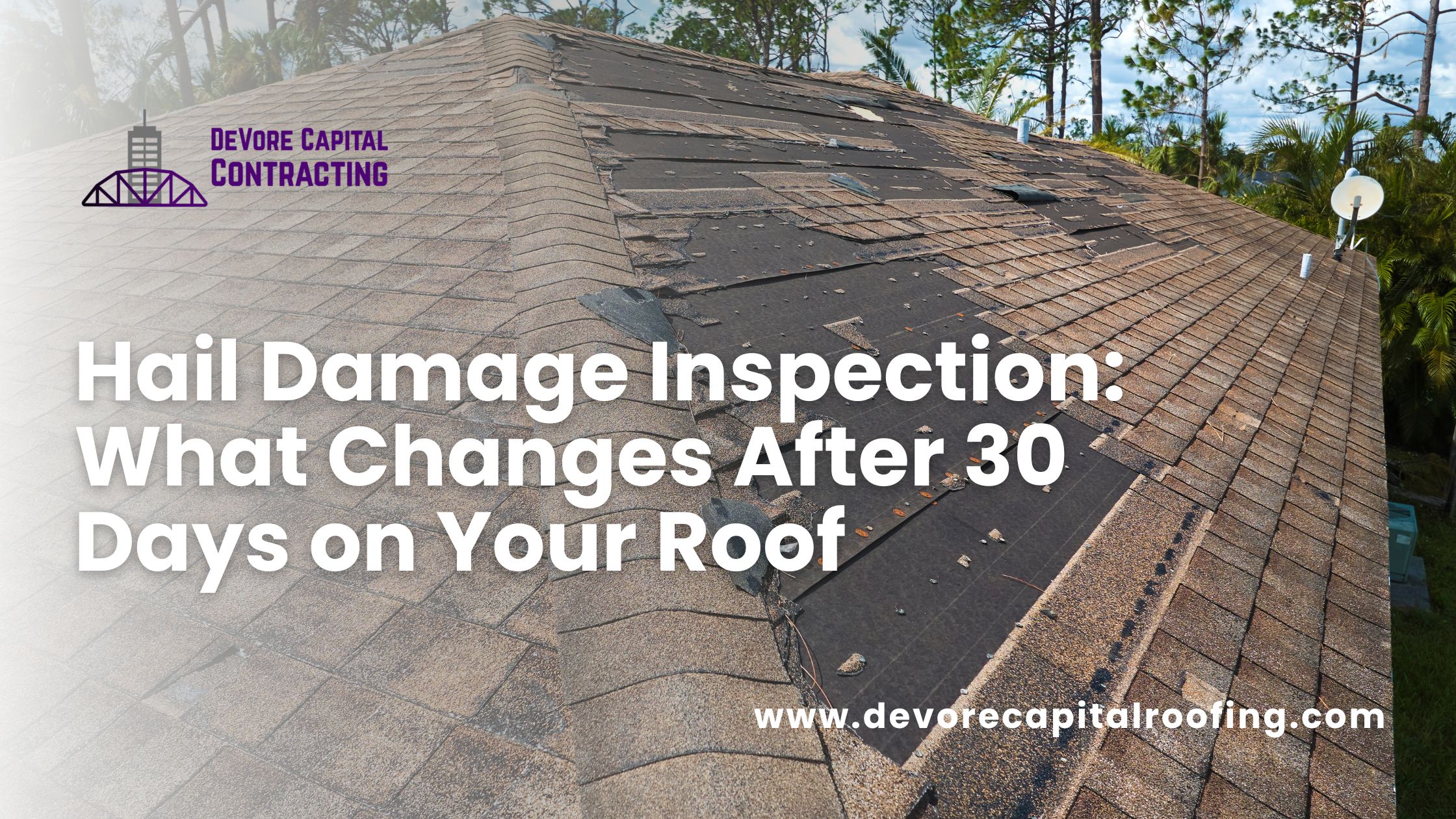
A homeowner in Ponte Vedra Beach noticed a few dented gutters after a spring hailstorm but assumed the shingles were fine since nothing was leaking. Six weeks later, water stains appeared on her ceiling, and the delay in getting the roof inspected had already started working against her insurance claim.
How to inspect a roof for hail damage starts with knowing what to look for immediately after a storm, since hail damage on shingles often looks minor at first but changes in appearance and severity the longer it goes unaddressed. Granule loss, bruising, and cracked mat exposed by hail can worsen within the first 30 days, which is why timing matters as much as the inspection itself.
This article explains what to look for when inspecting a roof for hail damage, and why the condition of that damage, and the strength of a related insurance claim, can shift significantly if inspection is delayed.
This article explains how to inspect a roof for hail damage after a storm in Jacksonville or Northeast Florida, and why the condition of that damage can change significantly in the first 30 days. It covers the specific signs a professional inspector looks for and why prompt inspection strengthens both the roof’s condition and any related insurance claim. Devore Capital Roofing provides free hail damage inspections throughout Duval County and the surrounding region.
Hail damage right after a storm often looks subtle rather than dramatic, showing up as small dark spots, granule displacement, or slight bruising rather than obvious holes or missing shingles. This is why many homeowners assume their roof is fine after a hailstorm when damage is already present.
Granule loss is one of the earliest signs, appearing as bare or thin patches on the shingle surface where the protective coating has been knocked away. Bruising, a soft spot where hail impact has fractured the shingle mat beneath the surface without fully breaking through, is even harder to spot without a close, hands-on inspection.
Hail damage tends to worsen in the first 30 days after impact because granule loss and bruising expose the shingle’s underlying mat to UV rays and moisture, which accelerates deterioration that was not initially visible. What starts as a minor bruise can develop into a crack or soft spot within weeks.
This progression matters for two reasons. First, a roof that could have been repaired with a smaller-scope fix right after the storm may require more extensive repair a month later. Second, as the damage evolves, it becomes harder for an inspector or adjuster to clearly attribute the current condition to the original hail event rather than to weeks of subsequent weather exposure.
Professional inspectors check for granule displacement, soft spots or bruising across the shingle surface, exposed fiberglass matting, and damage to metal components like vents, flashing, and gutters that often show hail impact more clearly than shingles do. Checking metal components first can actually help confirm whether a hailstorm was strong enough to damage the roof at all.
Inspectors also look for a consistent impact pattern across the roof, since randomly scattered marks may indicate something other than hail, while a widespread, directional pattern tied to a specific storm supports a stronger claim. A thorough inspection includes both a ground-level check of gutters and downspouts and a direct, on-roof assessment of the shingle surface.
Inspection timing matters because insurance adjusters look for clear evidence connecting roof damage to a specific, covered storm event, and that connection becomes harder to establish the more time passes and the more the damage changes. A prompt inspection captures the roof’s condition close to the actual storm date, which supports a stronger, more defensible claim.
Waiting weeks or months to schedule an inspection also risks additional weather exposure compounding the original hail damage, which can complicate an adjuster’s assessment of what was caused by the storm versus what developed afterward. Homeowners who schedule an inspection within days of a hailstorm are in a stronger position than those who wait until a leak forces the issue.
A ground-level visual check for obvious signs like dented gutters or visible shingle damage is reasonable for any homeowner, but a full hail damage inspection should be performed by a professional, since subtle bruising and mat damage are difficult to identify without training and direct roof access. Climbing onto a roof without proper safety equipment also creates unnecessary risk.
Attempting a DIY assessment, or delaying a professional inspection to save time, risks missing damage that could worsen or complicate a future insurance claim. A licensed, GAF-certified contractor knows exactly what hail damage looks like at different stages and can document findings in a way that supports an accurate claim.
Immediately after a hailstorm, homeowners should do a ground-level check for visible signs of damage, take photos of anything unusual, and schedule a professional roof inspection as soon as possible, ideally within the first few days. Prompt action gives the clearest possible record of the roof’s condition close to the storm date.
Northeast Florida’s hurricane season, which runs from June through November, often brings hail alongside high winds and heavy rain, so a post-storm inspection habit is worth building regardless of how minor a storm initially seems. Homeowners who wait for a leak to appear before scheduling an inspection have often already lost the strongest window for both repair and claim documentation.
Hail damage rarely announces itself clearly, and the difference between a roof inspected within days of a storm and one inspected a month later can significantly affect both repair scope and insurance outcome. Devore Capital Roofing, located at 233 E Bay St, Ste 912, Jacksonville, FL 32202, provides free hail damage inspections and insurance claims assistance for homeowners throughout Duval, St. Johns, Clay, Nassau, Baker, and surrounding Northeast Florida counties. Homeowners who want to know how to inspect a roof for hail damage on their own property can call (904) 746-0050 or visit https://devorecapitalroofing.com/ to schedule a free inspection before minor damage has a chance to worsen.
Signs of hail damage include granule loss on shingles, small dark bruised spots, dented gutters or vents, and cracked or missing shingle sections. Many signs are subtle and easiest to identify with a close, professional inspection rather than a visual check from the ground.
A roof should be inspected as soon as possible after a hailstorm, ideally within a few days, since hail damage can worsen over the following weeks and become harder to document accurately. Prompt inspection also supports a stronger insurance claim if damage is found.
Yes, hail damage that initially seems minor, such as granule loss or slight bruising, can worsen over time as the exposed shingle mat is affected by UV rays and moisture. What starts as a small issue can develop into a more significant repair need within weeks.
Homeowners insurance in Florida typically covers hail damage as a covered peril, similar to wind damage, though coverage details depend on the specific policy. A professional inspection with documentation helps support an accurate insurance claim for hail-related roof damage.
Granule loss refers to the protective coating being knocked off asphalt shingles, which is one of the earliest and most common signs of hail impact. Bare or thin patches on the shingle surface expose the material underneath to UV rays and accelerate wear.
A homeowner can do a basic ground-level check for visible signs like damaged gutters, but a full hail damage inspection should be done by a professional, since subtle bruising and mat damage are difficult to identify without training and direct access to the roof.
Filing timelines vary by insurance policy, but prompt inspection and documentation after a hailstorm generally strengthen a claim regardless of the specific filing deadline. Waiting too long can make it harder to connect current roof condition to the original storm event.
A professional hail damage inspection includes checking shingles for granule loss, bruising, and cracked matting, along with metal components like vents, flashing, and gutters that often show clearer signs of hail impact. Inspectors also look for a consistent damage pattern that supports connecting the findings to a specific storm.
Hail damage rarely looks severe right after a storm, which is exactly why it gets overlooked until it worsens or leads to a leak. Understanding how to inspect a roof for hail damage, and acting quickly after a storm, protects both the roof itself and the strength of any related insurance claim. Jacksonville homeowners who suspect hail damage should schedule a professional inspection as soon as possible rather than waiting for a problem to become visible from inside the home.