- (904) 746-0050
- info@devorecapital.com
- 8:30 AM - 5 PM Monday - Friday
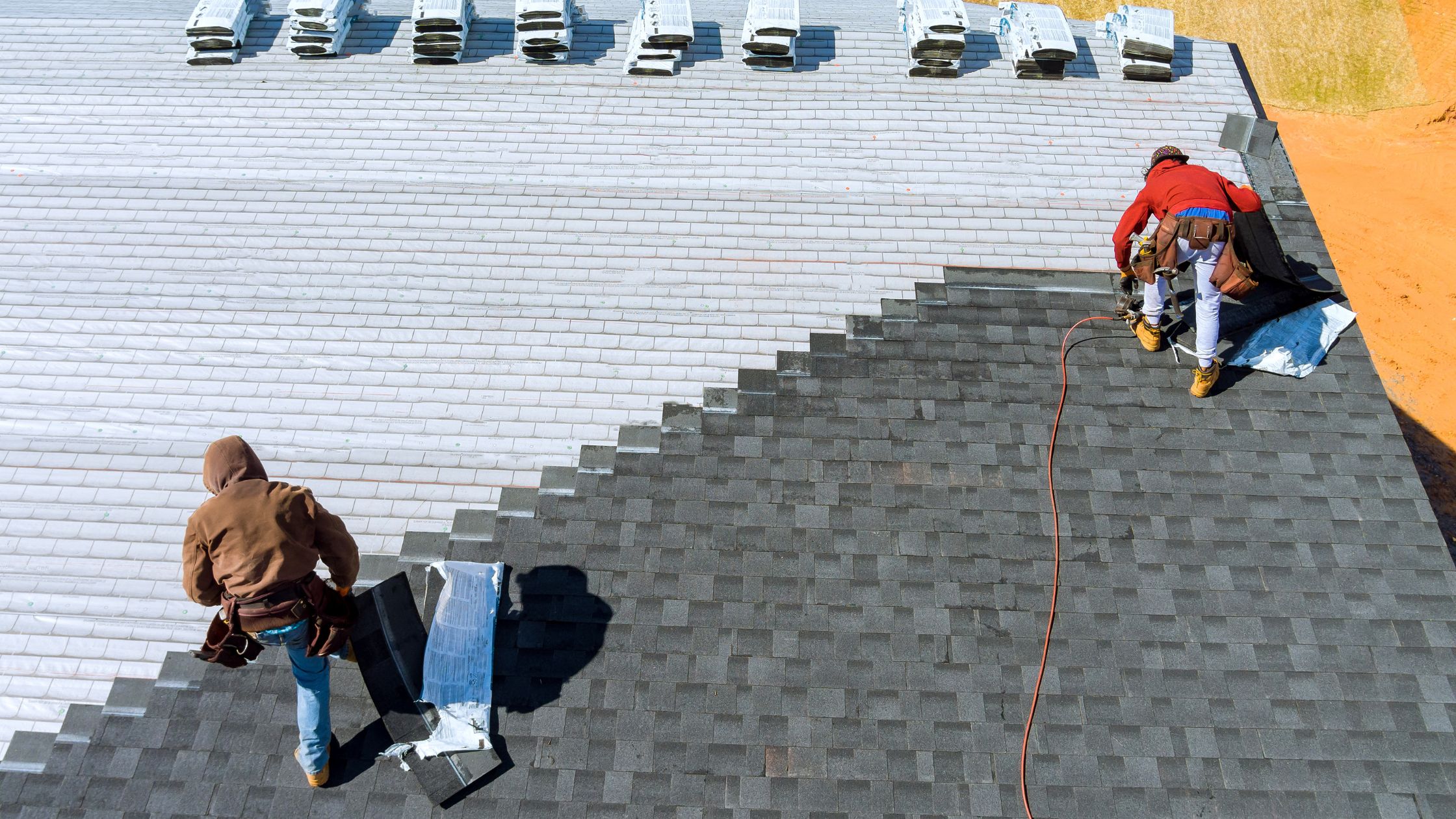
A faded, streaked, or aging asphalt shingle roof is a common sight on homes across Jacksonville, FL, particularly after years of intense Florida sun and humidity have worn down the granule surface. It is a natural instinct to look for a faster, less expensive fix than full replacement, and painting the shingles is one of the first ideas that comes to mind. Before spending a weekend with rollers and exterior paint, it is worth understanding what actually happens when shingles are painted and why most roofing professionals in Northeast Florida do not recommend it.
Can you paint roof shingles? Technically, yes, paint can be applied to asphalt shingles. But doing so is not recommended for most residential roofs, and it does not solve the underlying problem that made the roof look faded or worn in the first place. Standard exterior paint is not engineered to handle the thermal expansion, UV exposure, and moisture cycling that a roof surface experiences, and it can interfere with the shingle’s own protective granule layer, trap heat, and even void manufacturer warranties. For homeowners who want a refreshed appearance or extended roof life, a professional elastomeric coating or, in many cases, a roof replacement is the appropriate solution rather than standard paint.
This article explains exactly what happens when shingles are painted, why the practice creates more problems than it solves in Florida’s climate, and what better alternatives exist for Jacksonville homeowners who want to improve the look or performance of an aging shingle roof.
This article is for homeowners in Jacksonville and across Northeast Florida who are considering painting their asphalt shingle roof to improve its appearance or extend its life, and who want an honest, factual answer before spending time and money on the project. Devore Capital Roofing inspects residential shingle roofs throughout the region and helps homeowners understand whether their roof’s faded or worn appearance reflects a cosmetic issue or an underlying material problem that paint cannot fix. Topics covered include what happens chemically and physically when shingles are painted, why it tends to fail in Florida’s climate, what warranty and insurance consequences can result, and what legitimate alternatives exist for homeowners who want a better-looking or longer-lasting roof.
Asphalt shingles are engineered as a specific, layered material system: a fiberglass mat core, asphalt waterproofing layers, and a top surface of ceramic-coated mineral granules that provide UV protection, fire resistance, and color. Devore Capital Roofing installs and inspects this exact system for homes across Jacksonville, FL, and understanding how it is built explains why introducing a standard paint layer on top creates problems rather than solving them.
When exterior paint is applied over a shingle’s granule surface, it forms a film coating that sits on top of an already textured, granular surface rather than bonding the way it would to a smooth substrate like wood or stucco siding. This uneven bond is the first practical problem. Paint applied over loose or weathered granules does not adhere uniformly, and the irregular surface texture causes the paint film to crack and peel at a much faster rate than it would on a properly prepared, flat surface.
The second issue is thermal behavior. Asphalt shingles expand and contract daily as they heat in direct sun and cool overnight, and that expansion and contraction is more pronounced in Jacksonville’s climate than in cooler regions due to the intensity and duration of summer heat. Standard exterior paints, including most acrylic latex house paints, are not formulated with the elasticity required to move with that degree of thermal cycling without cracking. A paint film that cracks allows water to penetrate beneath it, where it can become trapped against the granule surface rather than draining away as it would on an unpainted shingle.
The third issue involves the granules themselves. The mineral granules on a shingle surface are not purely decorative. They reflect UV radiation and protect the asphalt layer beneath them from degrading prematurely. A paint film applied directly over those granules can interfere with their reflective and protective function, and in some cases accelerates heat absorption into the shingle if the paint color and the original granule color have different reflectivity values. This can increase surface temperature on the shingle, which speeds up the breakdown of the asphalt layer underneath, the opposite of the intended outcome.
Florida’s subtropical climate amplifies every one of the problems described above, which is why painting shingles tends to produce disappointing and short-lived results for homeowners in Jacksonville and across Northeast Florida specifically.
Intense UV exposure breaks down paint film faster than in cooler climates. Jacksonville receives more than 230 sunny days per year on average, and that consistent UV exposure degrades standard exterior paint at a significantly faster rate when it is applied to a horizontal or near-horizontal roof surface than when applied to vertical siding. Paint manufacturers formulate most residential exterior paints for wall applications, not roof surfaces, and the angle and intensity of UV exposure on a roof accelerates chalking, fading, and cracking well beyond what the same paint would experience on a wall.
High humidity creates persistent moisture exposure. Northeast Florida’s humidity means a painted shingle surface is rarely fully dry for extended periods, particularly during the warmer months. Moisture that becomes trapped beneath a cracked or peeling paint film has more opportunity to cause damage in this environment than it would in a drier climate, where the same paint failure might dry out before causing secondary problems.
Hurricane season tests adhesion repeatedly. Wind-driven rain during tropical storms and hurricanes puts direct pressure on any coating applied to a roof surface. A paint film with poor adhesion to the underlying shingle granules is far more likely to lift, peel, or wash away during a significant wind and rain event than a coating product specifically engineered and tested for roofing applications.
Heat cycling accelerates failure. The daily expansion and contraction cycle that Jacksonville roofs experience through Florida’s long, hot season puts continuous stress on a paint film that was not designed for that movement. What might be a slow, multi-year failure process in a cooler climate compresses into one to two years in Northeast Florida’s conditions.
This is one of the most important practical consequences of painting shingles that homeowners frequently overlook. Most asphalt shingle manufacturers, including GAF, specify in their warranty terms that the shingle must remain in its original, unaltered condition to maintain warranty coverage. Applying paint, sealants, or coatings not approved by the manufacturer can void the material warranty entirely.
For Jacksonville homeowners who have a GAF shingle roof under an active limited warranty, or a premium GAF System Plus or Silver Pledge warranty through a certified installation, painting the shingles with a non-approved product can eliminate that coverage. If a manufacturing defect or premature failure occurs after the shingles have been painted, the manufacturer may deny the claim on the basis that the unauthorized alteration changed the product from its tested and warranted condition.
This consequence matters significantly for a roof that still has meaningful years of warranty coverage remaining. A homeowner considering painting a roof that is seven years into a 30-year architectural shingle warranty is risking the remaining 23 years of coverage to address what is often a cosmetic concern that has other, warranty-safe solutions available.
Before applying any product to an existing shingle roof, including specialty roof coatings marketed for use over shingles, homeowners should confirm with their roofing contractor or directly with the manufacturer whether the specific product is approved for use over the existing shingle system without voiding the warranty.
For Jacksonville homeowners who are looking at a faded, streaked, or visually tired shingle roof and want a better path forward than painting, several legitimate alternatives address the underlying issues more effectively.
Professional roof cleaning. A significant amount of what homeowners perceive as fading is often algae growth rather than actual granule or color loss. The dark streaking common on Jacksonville-area roofs is caused by blue-green algae that thrives in Florida’s humidity, feeding on the limestone-based granules in standard asphalt shingles. A professional soft-wash roof cleaning, which uses low-pressure application of an appropriate cleaning solution rather than high-pressure washing that can dislodge granules, removes algae staining and restores much of a roof’s original appearance without altering the shingle material itself. This is a far less expensive and far less risky solution than painting for a roof that is otherwise in good structural condition.
Algae-resistant shingle upgrades at replacement. For homeowners who are due for a roof replacement regardless of the cosmetic concern, selecting a shingle product with built-in algae resistance technology, such as GAF’s StainGuard Plus copper-infused granules, addresses the staining problem at its source rather than requiring ongoing cleaning or any surface treatment after installation.
Professional elastomeric roof coating, where appropriate. Elastomeric coatings are an entirely different product category from standard paint. They are engineered specifically for roofing substrates, formulated with the elasticity to move with thermal expansion and contraction without cracking, and tested for UV reflectivity and waterproofing performance on roof surfaces. However, elastomeric coatings are most commonly and most effectively used on flat and low-slope roofing systems such as modified bitumen, single-ply membranes, metal roofing, and foam roofing, not on pitched asphalt shingle roofs, where the layered, granular shingle surface is not an ideal substrate for this type of coating. Devore Capital Roofing evaluates each roof individually to determine whether coating is a technically appropriate option for the specific roof type and condition.
Roof replacement when the shingles have reached the end of their functional life. If a faded, granule-thin shingle roof is approaching or past 20 years old, the fading is frequently a visible symptom of advancing material breakdown rather than a purely cosmetic issue. In this case, no surface treatment, paint or otherwise, addresses the underlying problem. A professional inspection determines whether the roof has meaningful remaining structural life or whether replacement is the financially sound next step.
Determining the right path forward for a faded or worn-looking shingle roof in Jacksonville requires distinguishing between a cosmetic issue and a material issue, which is best done through a professional inspection rather than a visual assessment from the ground.
Signs the issue is likely cosmetic and cleaning may help: Dark streaking concentrated in patterns that follow water flow paths, a roof that is otherwise structurally sound with no curling, cracking, or granule loss in bare patches, and a roof under 15 years old that has simply accumulated algae growth over time without other signs of material degradation.
Signs the issue is material and a coating or replacement should be considered: Granule loss visible as bare or thinning patches across multiple roof sections, shingles that have begun to curl, cup, or crack, a roof approaching or past 20 years old, or any combination of fading alongside other warning signs such as missing shingles or interior ceiling stains.
A professional inspection from Devore Capital Roofing gives Jacksonville homeowners a clear, documented assessment of which category their roof falls into, removing the guesswork from a decision that otherwise tempts many homeowners toward a quick paint job that does not address the actual condition of the roof.
If your shingle roof is showing fading, streaking, or wear and you are not sure whether cleaning, coating, repair, or replacement is the right next step, Devore Capital Roofing provides free roof inspections for homeowners throughout Jacksonville and Northeast Florida. As a GAF-certified roofing contractor serving Duval, St. Johns, Clay, Nassau, Baker, and surrounding counties, the team gives homeowners an honest, professional recommendation based on the actual condition of their roof rather than a guess from the driveway. Call (904) 746-0050, visit the office at 233 E Bay St, Ste 912, Jacksonville, FL 32202, or request your free inspection and estimate at www.devorecapitalroofing.com with no obligation.
Q: Can you paint roof shingles?
A: Technically, paint can be applied to asphalt shingles, but it is not recommended for most residential roofs. Standard exterior paint is not formulated to handle the thermal expansion, UV exposure, and moisture cycling that a roof surface experiences. It typically fails within one to two years in Florida’s climate, can interfere with the shingle’s protective granule layer, and may void the manufacturer’s warranty on the roofing material.
Q: Why does paint fail faster on roof shingles than on house siding?
A: Roof shingles experience more intense and prolonged UV exposure, greater thermal expansion and contraction, and more direct exposure to wind-driven rain than vertical siding does. Standard exterior paints are formulated primarily for wall applications, not horizontal or near-horizontal roof surfaces. In Jacksonville’s climate, with more than 230 sunny days per year and an active hurricane season, these conditions accelerate paint failure significantly faster than on a comparable wall surface.
Q: Does painting shingles void a GAF roof warranty?
A: Yes, in most cases. GAF and other major shingle manufacturers typically require shingles to remain in their original, unaltered condition to maintain warranty coverage. Applying paint or other unapproved coatings can void the material warranty, including premium tiers like the GAF System Plus or Silver Pledge Limited Warranty. Homeowners should confirm with the manufacturer or a GAF-certified contractor before applying any product to an existing shingle roof.
Q: What causes dark streaks on shingle roofs in Florida if not fading?
A: Dark streaking on Jacksonville-area shingle roofs is most commonly caused by blue-green algae, which thrives in Florida’s high humidity and feeds on the limestone-based granules in standard asphalt shingles. This is a biological growth issue rather than true color fading and can typically be removed through professional soft-wash roof cleaning rather than requiring paint, coating, or replacement.
Q: Is there a coating that actually works on shingle roofs instead of paint?
A: Professional elastomeric roof coatings are engineered specifically for roofing substrates and perform very differently than standard paint, but they are most commonly and effectively used on flat and low-slope roofing systems such as modified bitumen, single-ply membranes, metal, and foam roofing rather than on pitched asphalt shingle roofs. A professional inspection determines whether a specific roof type and condition is a good candidate for any coating product.
Q: How do I know if my faded shingle roof needs to be replaced instead of cleaned?
A: A faded roof that shows visible granule loss in bare patches, curling or cracking shingles, or that is approaching or past 20 years old is likely experiencing material degradation rather than a purely cosmetic issue that cleaning could resolve. A professional inspection distinguishes between algae staining, which cleaning addresses, and granule or material breakdown, which typically requires repair or full replacement.
Q: Can painting my roof shingles help with energy efficiency in Jacksonville?
A: Painting shingles is not a reliable way to improve energy efficiency and can sometimes worsen heat absorption if the paint color has different reflectivity than the original granule color. Homeowners interested in energy efficiency improvements should consider GAF Cool Series shingles at the time of replacement, which use granules specifically formulated to reflect more solar energy, or a professional elastomeric coating system on a flat or low-slope roof that qualifies for that treatment.
Q: What should I do if I already painted my shingle roof?
A: If shingles have already been painted, a professional roofing contractor should inspect the roof to assess whether the paint has caused any granule damage, trapped moisture, or accelerated wear, and to determine whether the manufacturer warranty has been affected. Depending on the extent of any resulting damage, the contractor can recommend whether the existing roof can continue in service, needs targeted repair, or should be replaced.
Painting roof shingles is technically possible but is not a solution most roofing professionals recommend for homes in Jacksonville and across Northeast Florida. The practice tends to fail quickly in this climate, can interfere with the shingle’s built-in protective properties, and frequently voids the manufacturer warranty that would otherwise protect the homeowner against defects and premature failure.
For homeowners dealing with a faded, streaked, or aging shingle roof, the better path forward depends on what is actually causing the appearance change. Algae staining responds well to professional cleaning. Genuine material degradation calls for repair or replacement, ideally with an algae-resistant, climate-appropriate shingle product selected with Florida’s conditions in mind. A professional inspection is the most reliable way to determine which category applies to a specific roof, and it is a far more reliable starting point than a weekend project with a paint roller.