- (904) 746-0050
- info@devorecapital.com
- 8:30 AM - 5 PM Monday - Friday
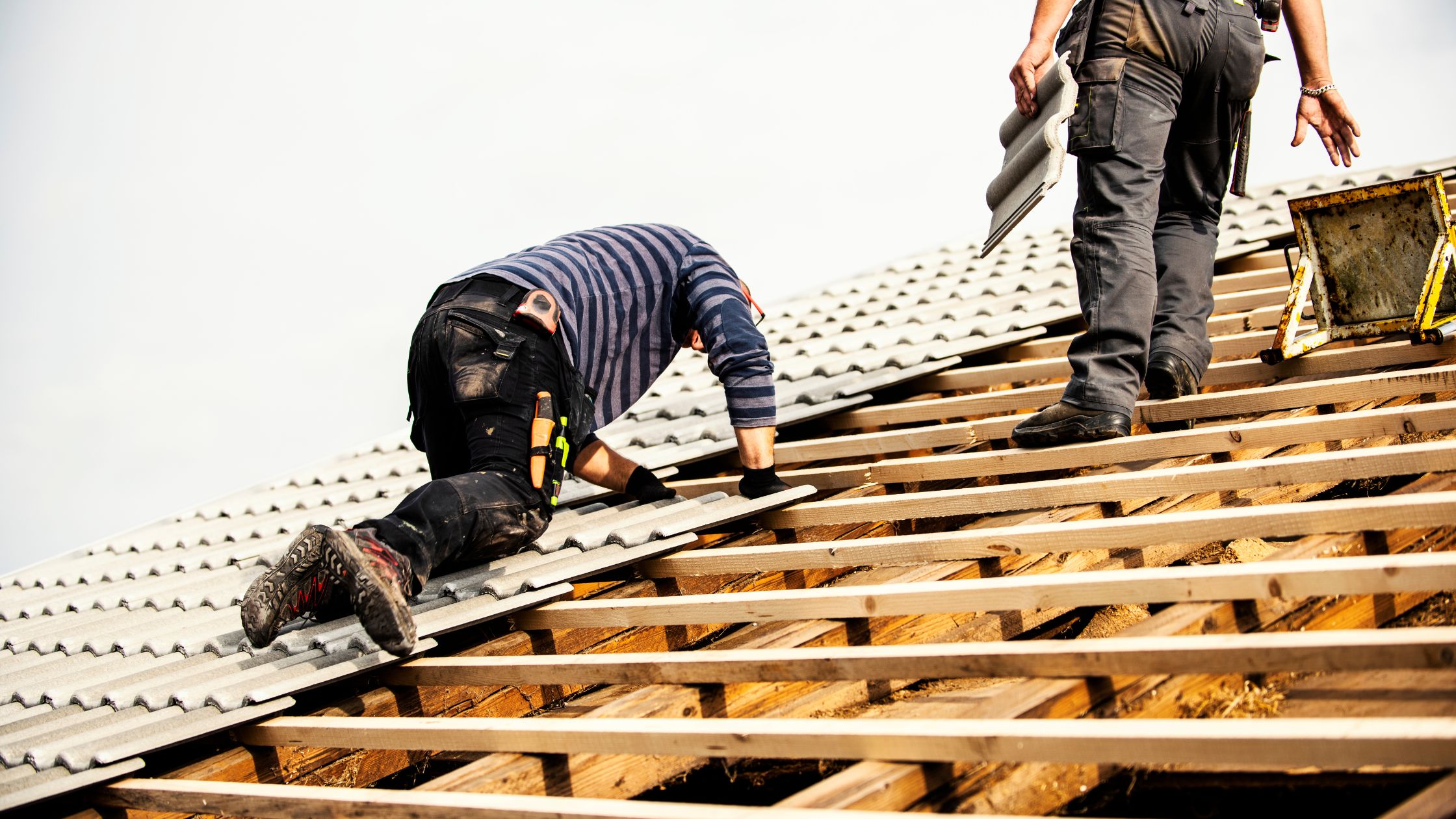
Within days of a major storm passing through Jacksonville, FL, a predictable pattern unfolds. Trucks with out-of-state plates appear in neighborhoods across Duval County. Door knocks start before the debris is even cleared. Offers for a free inspection, a fast start date, and a price that sounds too good arrive before homeowners have even called their insurance company. These contractors are commonly called storm chasers, and the tactics they use are specifically designed to get a signature before a homeowner has time to verify who they are actually hiring.
How do you choose a residential roofing contractor the right way in Jacksonville? The answer starts with refusing to be rushed. A legitimate roofing decision is made by verifying a contractor’s Florida license, confirming current liability and workers’ compensation insurance, checking for a genuine local business history, and comparing written, itemized estimates from contractors you contacted, not ones who knocked on your door. Storm chasers depend on homeowners skipping every one of those steps under time pressure. Slowing down is the single most protective action available.
This article exposes exactly how storm chaser tactics work, what they specifically avoid telling homeowners, and how to apply a reliable contractor selection process that protects your home and your insurance claim regardless of what arrives at your door after the next hurricane.
This article is for homeowners in Jacksonville and across Northeast Florida who want to understand exactly how storm chaser tactics work and how to build a contractor selection process that protects them regardless of what shows up at their door after a hurricane. Devore Capital Roofing has worked with homeowners across the region who have experienced storm chaser tactics firsthand, and the team helps property owners verify licensing, document storm damage properly, and navigate the insurance claims process with a contractor who has a genuine, long-term presence in the Jacksonville market. Topics covered include how storm chasers operate, what specific information they avoid disclosing, the verification steps every homeowner should take before signing a contract, and how to evaluate competing estimates with confidence.
Understanding the storm chaser business model makes their tactics far easier to recognize before a contract gets signed. These operations are built around speed and volume rather than long-term accountability, and every step in their process reflects that priority.
They follow the storm, not the relationship. Storm chaser crews travel from state to state, arriving in regions immediately after a hurricane, tropical storm, or major hail event. In Northeast Florida, this means a predictable surge of out-of-area trucks and door-to-door solicitors appearing in Jacksonville, Duval County, and surrounding areas within days of any significant storm. Their business model depends on volume across many storm events nationally rather than on repeat business or referrals within any single community, which removes the long-term incentive to stand behind their work.
They solicit door-to-door because legitimate contractors don’t need to. An established roofing contractor with an active local presence in Jacksonville has an existing customer base, referral network, and project schedule that generates business without needing to canvas storm-damaged neighborhoods. A crew knocking on doors offering an immediate free inspection is a sales tactic built around capturing homeowners before they have a chance to research alternatives, not a normal customer acquisition method for a roofing business with a genuine local reputation.
They use the homeowner’s own roof inspection against them. Storm chasers frequently offer a free inspection and, regardless of the roof’s actual condition, identify damage that justifies a full replacement. This is not always dishonest in every case, since storm damage assessment does involve professional judgment, but the incentive structure for a crew that needs volume to be profitable skews heavily toward finding replacement-level damage rather than recommending a more conservative repair. A second opinion from a licensed local contractor is the most reliable check against this incentive.
They move fast because delay exposes the gaps in their operation. The urgency in a storm chaser’s sales process is not about getting the homeowner’s roof fixed quickly. It is about getting a signature before the homeowner verifies the contractor’s license, checks reviews, calls references, or gets a competing estimate. Every hour a homeowner spends researching is an hour where the storm chaser’s actual business practices, license status, and local accountability come into question.
The information gap between what storm chasers present and what homeowners actually need to know is where the real risk lives. Several specific facts are routinely left out of the conversation.
They rarely volunteer their Florida license status. Florida requires roofing contractors to hold a valid state license through the Department of Business and Professional Regulation (DBPR). Storm chasers operating without a proper Florida license, or operating under a license held by someone other than the person soliciting the work, will not bring this topic up voluntarily. Homeowners have to ask directly and then verify the answer independently at the DBPR online lookup portal.
They don’t mention what happens when they leave the area. Storm chaser crews typically complete a wave of projects in a region and then move on to the next storm event elsewhere in the country. If a workmanship issue surfaces six months or two years later, the company that installed the roof may no longer have any presence in Jacksonville, no local phone number that connects to a live representative, and no practical path for the homeowner to pursue a warranty claim. This is rarely disclosed during the sales process because it directly undermines the pitch.
They downplay the consequences of Assignment of Benefits agreements. Some storm chasers present an Assignment of Benefits (AOB) document as a convenience that lets the homeowner avoid dealing with the insurance company directly. What is not always explained clearly is that an AOB transfers the homeowner’s legal rights under their insurance policy directly to the contractor, who can then file claims, negotiate settlements, and even pursue litigation against the insurer using the homeowner’s policy without the homeowner’s ongoing involvement or full visibility into the process. Florida has passed legislation in recent years specifically to curb abuse in this area, including restrictions on attorney fee multipliers tied to AOB litigation, because the arrangement had been widely exploited.
They do not explain what their insurance actually covers. A storm chaser who is asked about liability and workers’ compensation insurance may produce a document, but homeowners rarely verify whether that policy is current, whether it actually covers the specific work being performed, or whether it covers subcontracted labor if the crew uses subcontractors rather than direct employees. An unverified insurance certificate provides no real protection.
They do not disclose how the workmanship warranty actually works, or whether one exists at all. A material warranty from the shingle manufacturer is separate from a workmanship warranty from the installing contractor. Storm chasers frequently reference manufacturer warranties prominently while saying very little about what happens if their own installation work fails. Without a contractor with a permanent local presence standing behind a written workmanship warranty, that protection is effectively meaningless.
Building a reliable verification process protects homeowners regardless of whether the contractor at the door is a legitimate local business or an out-of-state operation working the storm. These steps take a modest amount of time and provide real protection.
Verify the Florida contractor license directly through DBPR. Search the contractor’s name or license number at the Florida Department of Business and Professional Regulation’s online lookup portal. Confirm the license is active, properly classified for roofing work, and free of disciplinary history. This single step, which takes only a few minutes, eliminates the majority of risk associated with unlicensed storm chasers.
Confirm a genuine, verifiable local address and business history. Search the business name and address independently rather than relying on a card or flyer. A roofing contractor with multiple years of operating history in Jacksonville and Northeast Florida, a real physical office, and a pattern of completed local projects represents a fundamentally different risk profile than a business entity registered shortly after a recent storm.
Request and verify certificates of liability and workers’ compensation insurance. Ask for current certificates directly, not verbal assurance. Confirm the policy dates are active through the expected project completion timeframe and that your property would be covered as an additional insured for the duration of the work.
Get the proposal in writing and take time to review it. A legitimate contractor provides a written, itemized estimate and gives the homeowner reasonable time to review it, compare it to other estimates, and ask follow-up questions. Refuse any “sign today for this price” pressure tactic regardless of how it is framed.
Get at least one independent second opinion. Particularly after a storm, a second professional inspection from a different licensed contractor confirms whether the damage assessment and recommended scope of work from the first contractor is accurate. This step alone exposes inflated damage claims and unnecessary replacement recommendations before any commitment is made.
Consult an attorney before signing any Assignment of Benefits document. AOB agreements carry real legal and financial consequences for the homeowner. If a contractor presents one as part of the contract, review it independently or with legal counsel before signing, and understand that you are not required to sign an AOB to have your roof repaired or your insurance claim processed.
Confirm the workmanship warranty terms in writing. Ask specifically what the contractor’s workmanship warranty covers, for how long, and how a claim against that warranty would be handled if the company’s circumstances changed. A contractor unwilling to put these terms in writing is signaling how reliable those commitments actually are.
Once a homeowner has verified licensing and insurance for the contractors under consideration, comparing their proposals accurately is the next step in making a confident decision.
Request itemized, written estimates that break out material costs, labor, tear-off and disposal, underlayment specifications, flashing work, and permit fees separately. A single bottom-line number with no breakdown provides no basis for an accurate comparison and no protection if a dispute arises about scope later.
Compare the specific shingle product, underlayment, and accessory components named in each proposal rather than assuming all GAF or all architectural shingle proposals represent equivalent systems. Two proposals listing the same shingle brand can specify meaningfully different underlayment quality, fastening patterns, and flashing materials, all of which affect how the roof performs through the next storm season.
Evaluate the warranty structure side by side. A GAF-certified contractor can offer the GAF System Plus Limited Warranty, which includes both material and workmanship coverage. A proposal that references only the manufacturer’s standard limited warranty is offering meaningfully less protection, regardless of how similar the shingle product itself appears on paper.
Be appropriately skeptical of bids that are significantly lower than the others. In the aftermath of a storm, when demand for roofing services in Jacksonville spikes sharply, a bid that undercuts the local market significantly is more likely to reflect lower-grade materials, thinner underlayment, or a crew working on volume-based piece rates that prioritize speed over precision than it is to reflect genuine cost efficiency.
Confirm that each contractor’s proposal includes pulling the required building permit for the project. Florida Building Code requires permits for residential roof replacements, and the permit inspection process is a real check on installation quality that benefits the homeowner. Any contractor who suggests skipping the permit to save time or money is asking the homeowner to accept legal and financial risk that a permitted, inspected installation would not carry.
The single factor that distinguishes a trustworthy roofing contractor from a storm chaser is not price, speed, or even the specific shingle product offered. It is whether the company has a genuine, ongoing presence in Jacksonville and Northeast Florida that makes it accountable to the homeowner for years after the installation crew leaves the property.
A contractor with deep local roots in Duval County has a reputation built over years of completed projects, has relationships with local suppliers and subcontractors that support consistent quality, and has every incentive to stand behind a workmanship warranty because their continued business in this specific market depends on it. A storm chaser operating on a national circuit has none of those incentives once the current storm cycle in Northeast Florida winds down and the crew moves to the next region.
Devore Capital Roofing maintains a permanent office and an established service history across Duval, St. Johns, Clay, Nassau, Baker, and surrounding counties, and provides insurance claims assistance for homeowners navigating storm damage claims with the legitimate documentation and accountability that an out-of-state operation cannot offer. That local accountability is the protection that matters most when a workmanship question or warranty claim arises two, five, or ten years after the installation date.
If your home has sustained storm damage, or if you simply want a trustworthy second opinion before committing to a contractor who has approached you, Devore Capital Roofing provides free roof inspections and free written estimates for homeowners throughout Jacksonville and Northeast Florida. As a GAF-certified roofing contractor with a verifiable, long-standing local presence, the team offers the licensing, insurance, and accountability that every homeowner should require before signing a roofing contract. Call (904) 746-0050, visit the office at 233 E Bay St, Ste 912, Jacksonville, FL 32202, or request your free inspection at www.devorecapitalroofing.com with no obligation.
Q: How do I choose a residential roofing contractor in Jacksonville, FL, after a storm?
A: Verify the contractor holds a valid Florida roofing license through the DBPR online lookup portal, confirm current liability and workers’ compensation insurance, and check for a genuine local business history in Northeast Florida. Get written, itemized estimates from contractors you contacted directly rather than ones who solicited you door-to-door, and get at least one independent second opinion before committing to a major repair or replacement.
Q: What is a storm chaser roofing contractor?
A: A storm chaser is a roofing contractor, often unlicensed in the local state or operating from out of state, who travels to regions immediately following major storms to solicit roofing work. These operators typically use door-to-door solicitation, same-day pricing pressure, and urgency tactics to secure contracts before homeowners can verify licensing, insurance, or local business history. Storm chasers often leave the area once the immediate post-storm demand subsides, leaving homeowners without local recourse for warranty issues.
Q: How do I verify a roofing contractor’s license in Florida?
A: Florida roofing contractor licenses can be verified at the Florida Department of Business and Professional Regulation (DBPR) online lookup portal by searching the contractor’s name or license number. Confirm the license is active, properly classified for roofing work, and free of disciplinary actions. This verification takes only a few minutes and should be completed before signing any contract, regardless of how the contractor presented themselves.
Q: What is an Assignment of Benefits and why should I be cautious about it?
A: An Assignment of Benefits (AOB) is a document that transfers a homeowner’s insurance claim rights directly to a contractor, who then handles the claim and negotiates with the insurer without the homeowner’s ongoing direct involvement. Florida has restricted AOB arrangements through legislation in recent years due to widespread abuse, including inflated claims and aggressive litigation tactics. Homeowners are never required to sign an AOB to have roofing work performed and should consult an attorney before signing one.
Q: What red flags indicate a roofing contractor might be a storm chaser?
A: Warning signs include unsolicited door-to-door solicitation immediately following a storm, pressure to sign a contract the same day, no verifiable local business address or history in Northeast Florida, reluctance to provide a Florida license number, requests to sign an Assignment of Benefits document, and verbal-only warranty promises with nothing in writing. Any one of these signs warrants caution, and multiple signs together should prompt a homeowner to decline and seek a different contractor.
Q: Should I get a second opinion before agreeing to a roof replacement in Jacksonville?
A: Yes, particularly after a storm event when demand for roofing services spikes and inflated damage assessments become more common. A second professional inspection from an independent, licensed local contractor confirms whether the recommended scope of work, repair versus replacement, matches the actual condition of the roof. This step is especially valuable when the original assessment came from a contractor who solicited the homeowner directly rather than one the homeowner contacted independently.
Q: Does homeowners insurance cover roof damage assessed by a storm chaser?
A: Insurance coverage depends on the actual cause and extent of the damage, not on which contractor performed the inspection. However, claims supported by inflated or inaccurate damage assessments can create complications during the insurance review process and may be challenged by the insurer. Working with a licensed, locally accountable contractor who provides accurate, well-documented damage assessment supports a more reliable and defensible insurance claim than one based on an assessment from an unverified contractor.
Q: How can I find a trustworthy local roofing contractor in Jacksonville instead of relying on door-to-door offers?
A: Look for a roofing contractor with a verifiable, multi-year local business history in Jacksonville and Northeast Florida, current Florida licensing and insurance, manufacturer certification such as GAF certification, and a track record of completed local projects. Devore Capital Roofing maintains a permanent local office and provides free inspections and estimates, giving homeowners a verified alternative to door-to-door solicitation after a storm.
Storm chasers depend on speed, pressure, and homeowners skipping the basic verification steps that would otherwise expose how thin their local accountability actually is. The protection against that tactic is straightforward and does not require any special expertise: verify the license, confirm the insurance, check for a genuine local history, get the proposal in writing, and take the time to compare it against at least one other estimate before signing anything.
For homeowners in Jacksonville and across Northeast Florida, the contractor who deserves the work is rarely the one who showed up uninvited days after a storm. It is the licensed, GAF-certified, locally established roofing professional who has been serving the community for years and will still be there to honor a workmanship warranty long after the immediate storm recovery period has passed. That distinction is worth the extra hour of verification every single time.