- (904) 746-0050
- info@devorecapital.com
- 8:30 AM - 5 PM Monday - Friday
Most roof damage in Jacksonville, FL, does not announce itself with a visible stain on the ceiling right away. It hides. Moisture works its way beneath shingles, membranes, and underlayment layers, soaking into insulation and decking for weeks or months before any interior sign appears. By the time a homeowner notices water damage inside their home in Duval County, the roof above it has often been compromised for a long time.
Thermal imaging home inspection is a non-invasive diagnostic method that uses infrared camera technology to detect temperature differences on and beneath roof surfaces, revealing moisture, heat loss, and hidden damage that a standard visual inspection cannot find. For homeowners across Northeast Florida, it is one of the most practical tools available for catching roof problems early, before they turn into expensive repairs or full replacements.
This article explains exactly what thermal imaging home inspection is, how it works on residential roofs, what it can and cannot detect, and why it makes particular sense for homeowners in Jacksonville’s demanding climate.
This article is for homeowners in Jacksonville and across Northeast Florida who have heard about thermal imaging home inspection and want a plain-language explanation of what it is, how it works, and when it makes sense for their roof. Devore Capital Roofing performs thermal roof inspections for residential properties throughout the region, helping homeowners identify hidden moisture, failing insulation, and post-storm damage before those problems reach the interior of the home. Topics covered include how infrared technology detects roof problems, what conditions produce the best results, what thermal imaging cannot tell you, and what the inspection process looks like from start to finish.
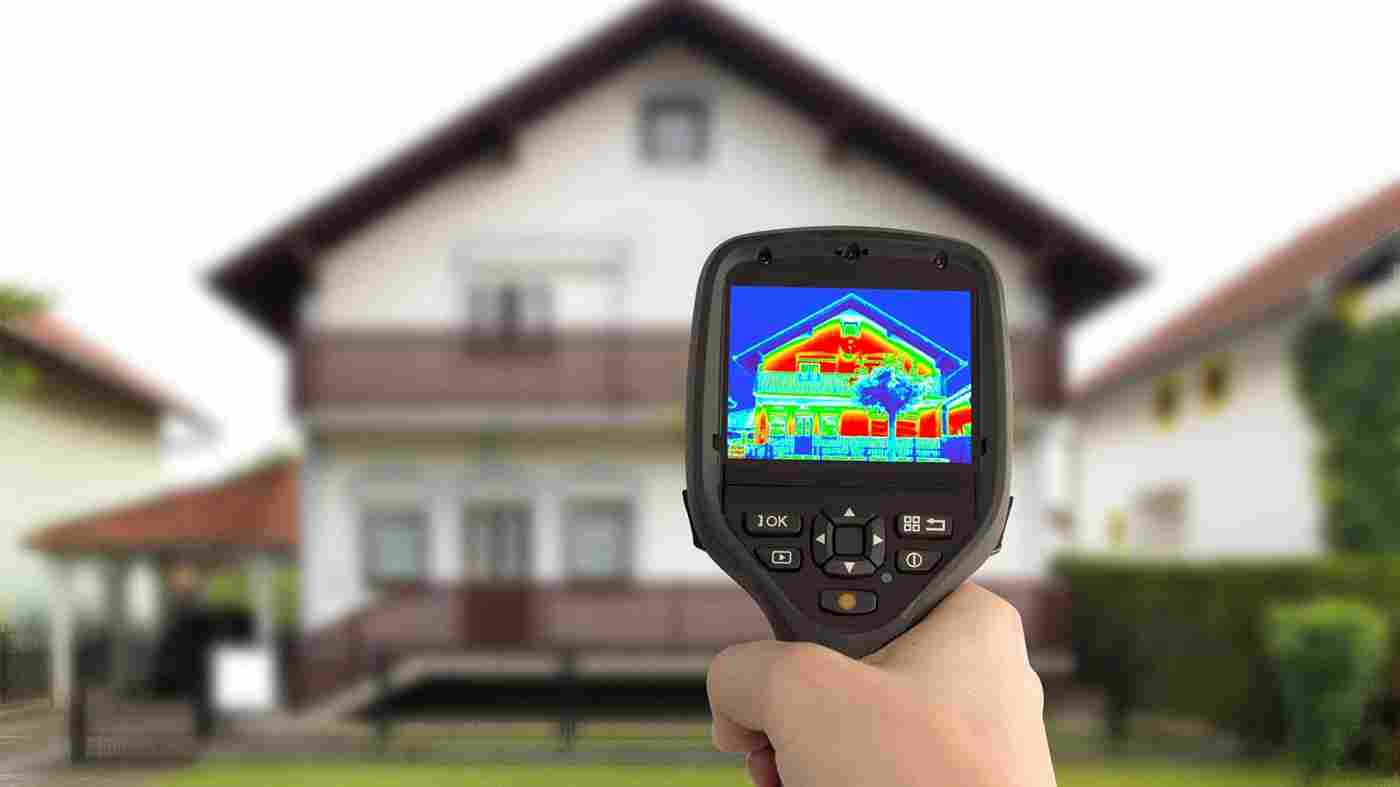
Thermal imaging home inspection is a diagnostic process that uses an infrared camera to measure the surface temperature of a roof and translate those readings into a color-coded visual image called a thermogram. Devore Capital Roofing performs these inspections for residential properties across Jacksonville, FL, where the combination of intense heat, summer storms, and high humidity creates ideal conditions for hidden moisture infiltration.
The science behind it is straightforward. Every material on a roof surface absorbs and releases heat at a different rate. Dry roofing materials, such as insulation, decking, and membrane, heat up during the day and release that heat at a predictable rate as temperatures drop in the evening. Wet materials behave differently. Moisture in insulation or beneath a membrane absorbs heat more slowly during the day and retains it longer after sunset. An infrared camera detects those retention differences as distinct temperature variations on the thermogram, showing wet or damaged areas in contrasting colors against the surrounding dry roofing material.
The result is a visual map of the roof surface that identifies problem areas precisely and non-invasively, without cutting into the roof, lifting tiles, or disturbing the membrane in any way. For homeowners in St. Johns County or anywhere across Northeast Florida who suspect their roof may have hidden damage but do not want to commit to invasive testing or an unnecessary repair, a thermal inspection gives clear, documentable answers.
Thermal imaging is particularly effective at identifying conditions that standard visual inspections routinely miss. On a residential roof in Jacksonville, the most common findings include the following.
Moisture trapped beneath the membrane or underlayment is the primary target of any thermal roof inspection. Whether caused by a storm, a failed flashing seal, a cracked tile, or a compromised shingle, moisture that has worked its way beneath the surface layer will show up clearly on a thermogram under the right conditions. Catching this moisture before it saturates the decking below is the difference between a targeted repair and a full deck replacement.
Wet or compromised insulation is another frequent finding on flat and low-slope residential roofs across Duval County. Insulation that has absorbed moisture loses its thermal performance and begins to break down structurally. Thermal imaging maps the full extent of the wet area, which helps the contractor scope the repair accurately and avoid leaving compromised insulation in place beneath a new surface layer.
Failed or missing insulation areas appear on a thermogram as sections where heat is escaping the building at a higher rate than surrounding areas. While this is more commonly associated with energy audits, it is also relevant for residential roofing assessments because insulation gaps create conditions where condensation forms on interior roof deck surfaces, contributing to mold growth and structural decay over time.
Post-storm damage mapping is one of the most practical applications for Jacksonville homeowners following a hurricane or tropical storm. Wind events can compromise flashing seals, lift shingles, and displace underlayment without leaving any visible exterior sign. A thermal inspection conducted after a storm documents the full scope of damage, including areas where water has already infiltrated, which is critical evidence when filing an insurance claim with your homeowner’s insurance provider. Devore Capital Roofing provides insurance claims assistance alongside its thermal inspection service, helping homeowners in Northeast Florida document storm damage accurately and support the claims process from start to finish.
Areas of membrane separation or delamination on flat roofs show up as thermal anomalies because air gaps between layers insulate differently than bonded surfaces. These separations are entry points for water and can expand rapidly during the thermal cycling that Florida roofs experience daily.
Understanding the limits of thermal imaging is as important as understanding its capabilities. A thermal inspection is a powerful diagnostic tool, but it is not a complete substitute for a thorough professional roof inspection.
Thermal imaging detects temperature differences, not moisture directly. A highly skilled inspector reads the thermogram and interprets which anomalies are likely attributable to moisture versus other causes such as material transitions, shadows, or HVAC exhaust nearby. Interpreting a thermogram accurately requires training and experience with the specific roof types and climate conditions present in Northeast Florida. An infrared camera in the hands of an untrained operator produces data that is easy to misread.
Thermal imaging also requires specific environmental conditions to produce reliable results. The most useful scans are performed shortly after sunset or in the early evening hours, after the roof surface has had time to absorb heat during the day. Clear daytime sun followed by rapid evening cooling is the ideal setup, and Jacksonville’s climate provides this regularly. On overcast days, during rain, or immediately after a storm when the roof surface is uniformly wet, thermal imaging results are less reliable and harder to interpret.
Active, fresh leaks that have not yet saturated surrounding materials may not show up clearly on a thermogram. Thermal imaging is best at identifying areas where moisture has been present long enough to alter the thermal mass of the roofing assembly. A roof inspection that combines visual assessment and thermal imaging together provides the most complete and accurate picture of a roof’s condition.
Thermal imaging is not a tool every homeowner needs every year, but there are specific situations where it delivers clear, practical value for residential properties in Jacksonville and across Northeast Florida.
Before purchasing a home. A thermal inspection performed during the home-buying process on any property with a flat roof section, an aging tile or shingle roof, or a history of storm damage provides a level of diagnostic certainty that a standard home inspection cannot match. Discovering hidden moisture damage before closing is far preferable to discovering it after.
After a hurricane or tropical storm. Any storm that brings significant wind, rain, or flying debris over Jacksonville creates the potential for hidden roof damage. A thermal inspection after the storm documents the full scope of any moisture intrusion and creates the photographic and thermographic record needed to support an insurance claim.
When a roof is approaching 15 to 20 years old. Aging roofs in Northeast Florida have typically experienced enough UV exposure, thermal cycling, and storm stress to develop subtle moisture infiltration that has not yet reached the interior. A thermal inspection at this stage tells you whether the roof is performing adequately or whether underlayment degradation is creating undetected vulnerabilities.
When you notice a ceiling stain but cannot identify the source. Interior water stains are often misleading because water travels along structural members before dripping. A thermal inspection of the roof above the stain maps the actual moisture boundaries and identifies the true entry point, saving time and preventing unnecessary tear-outs.
As part of routine annual roof maintenance. Homeowners with flat or low-slope roofs in Ponte Vedra Beach, Nocatee, or anywhere along the Northeast Florida coast who prioritize protecting their investment benefit from including a thermal scan in their annual inspection schedule. Devore Capital Roofing offers free roof inspections for residential properties and can advise on whether a thermal component is appropriate for a specific roof’s age and condition.
The cost of a thermal imaging home inspection varies based on roof size, access conditions, and whether it is performed as a standalone service or as part of a broader roof inspection. In the Jacksonville market, homeowners can generally expect the following in 2026:
Residential thermal roof inspection: $300 to $700 for most single-family homes, depending on roof size and complexity. Larger homes, properties with multiple roof sections, or roofs with difficult access fall toward the upper end of that range.
Combined visual and thermal inspection: Some roofing contractors bundle a standard visual inspection with a thermal scan into a single service call, which is generally more cost-effective than scheduling each separately and produces a more thorough assessment overall.
Free inspection with thermal component: Devore Capital Roofing offers free roof inspections and can advise during that inspection whether thermal imaging is warranted based on the roof’s age, history, and condition. In many cases, a thorough free inspection identifies the issue without requiring a paid thermal scan. When the thermal scan is the right tool for the situation, the team discusses that recommendation clearly and explains what the results will provide before any additional work is scheduled.
For context, a thermal inspection that identifies $2,000 worth of moisture damage before it reaches the decking saves a homeowner from a repair that could easily run $8,000 to $15,000 once structural work and interior remediation are factored in. In Jacksonville’s climate, where a single storm can drive significant water into a compromised roof section, that early detection is not a luxury. It is a practical financial decision.
Knowing what the process looks like helps homeowners in Jacksonville and across Northeast Florida prepare and set realistic expectations for what the inspection will and will not tell them.
The inspector arrives with a calibrated infrared camera and conducts the scan from the roof surface, from ground level using a high-sensitivity telephoto infrared lens depending on the roof type, or both. For flat and low-slope roofs, direct rooftop access produces the clearest results because the camera captures temperature variations across the membrane surface directly. For pitched tile or shingle roofs, interior attic scanning is often combined with exterior imaging to build a complete picture.
The scan itself typically takes 30 to 90 minutes for a standard residential roof, depending on size. The inspector documents all thermal anomalies photographically and maps them to specific roof zones. After the scan, the inspector reviews the thermographic findings alongside the visual inspection results and produces a written report that identifies areas of concern, explains what the thermal data indicates, and recommends specific next steps.
If moisture infiltration is confirmed, the report maps the affected area clearly enough for a roofing crew to target the repair precisely, without tearing off more of the roof than necessary. That precision is one of the most tangible cost benefits of thermal imaging for residential homeowners across Duval County.
If you own a home in Jacksonville or anywhere in Northeast Florida and have questions about your roof’s condition, Devore Capital Roofing is ready to give you a clear, professional answer. As a GAF-certified roofing contractor with extensive experience across residential roof systems throughout Duval, St. Johns, Clay, Nassau, and surrounding counties, the team brings the local expertise and technical capability that Florida’s demanding climate requires. Reach out at (904) 746-0050, stop by the office at 233 E Bay St, Ste 912, Jacksonville, FL 32202, or visit www.devorecapitalroofing.com to schedule your free roof inspection and find out whether a thermal imaging assessment is the right next step for your home. There is no obligation, just an honest professional evaluation of what your roof actually needs.
Q: What is thermal imaging home inspection?
A: Thermal imaging home inspection is a non-invasive diagnostic process that uses an infrared camera to detect temperature differences on roof and building surfaces. On residential roofs, it reveals hidden moisture beneath the membrane, compromised insulation, failed flashing seals, and post-storm damage that standard visual inspections cannot identify. The camera produces a color-coded thermogram that maps problem areas precisely without disturbing the roof surface.
Q: How accurate is thermal imaging for detecting roof leaks?
A: Thermal imaging is highly accurate for detecting moisture that has been present long enough to alter the thermal behavior of surrounding roofing materials. It is most reliable when performed under ideal conditions, typically in the evening after a sunny day when rooftop temperature differentials are greatest. In Jacksonville’s climate, those conditions occur frequently, making thermal imaging a consistently effective diagnostic tool for residential roofs throughout Northeast Florida.
Q: When is the best time to do a thermal imaging roof inspection in Jacksonville, FL?
A: The most reliable results come from scans performed in the evening after a clear, sunny day, when the roof surface has absorbed significant solar heat and is beginning to cool. Clear summer and fall evenings in Jacksonville provide ideal conditions. Overcast days, periods immediately after rainfall, or scans conducted during the middle of the day produce less reliable results.
Q: Can thermal imaging detect roof leaks on shingle roofs?
A: Yes, though thermal imaging is most commonly associated with flat and low-slope roofs. On pitched shingle roofs, thermal imaging, particularly when combined with attic interior scanning, can identify areas where moisture has penetrated beneath the shingle layer and into the underlayment or decking. It is especially useful for locating the true source of leaks when interior ceiling stains suggest water intrusion but the entry point is not visible from the exterior.
Q: Does homeowners insurance cover roof damage found during a thermal inspection in Florida?
A: Coverage depends on the cause of the damage and the terms of your specific policy. Damage caused by storms, wind, or sudden events is typically covered by Florida homeowners insurance. Damage attributed to wear and gradual deterioration is generally not. A thermal inspection that documents the presence and extent of storm-related moisture intrusion creates valuable supporting evidence for an insurance claim. Devore Capital Roofing provides insurance claims assistance alongside its inspection services for homeowners across Northeast Florida.
Q: How much does a thermal imaging roof inspection cost for a residential home in Jacksonville?
A: A residential thermal roof inspection in Jacksonville typically costs between $300 and $700 in 2026, depending on roof size and complexity. When bundled with a standard visual inspection, the combined service is generally more cost-effective than scheduling each separately. Devore Capital Roofing offers free initial inspections and can advise during that visit whether a thermal scan is warranted for a specific roof’s age and condition.
Q: Is thermal imaging home inspection the same as a regular home inspection?
A: No. A standard home inspection is a general assessment of all major building systems, typically performed during a real estate transaction, and includes only a visual examination of the roof. A thermal imaging roof inspection is a specialized diagnostic service focused specifically on the roof assembly and uses infrared technology to identify conditions invisible to the naked eye. The two serve different purposes and are most valuable when used together on properties where roof condition is a concern.
Q: How long does a thermal imaging roof inspection take?
A: A thermal imaging scan on a standard residential roof in the Jacksonville area typically takes 30 to 90 minutes, depending on roof size, access conditions, and whether attic interior scanning is included. The written report with thermographic documentation is generally provided within one to two business days after the inspection visit.
Thermal imaging home inspection gives Jacksonville homeowners a level of diagnostic certainty that no visual inspection alone can provide. It finds the hidden moisture, the failing insulation, and the post-storm infiltration that sits silently beneath a roof surface until it becomes an expensive structural problem. For homeowners in Northeast Florida’s demanding climate, where summer storms, intense UV exposure, and hurricane season create consistent roofing stress, that early detection is one of the most practical investments in protecting a home’s long-term value.
The technology is only as useful as the expertise interpreting it. Working with a licensed, GAF-certified roofing contractor who has hands-on experience with the roof types and climate conditions specific to Jacksonville and the surrounding region is what turns a thermographic scan into an actionable repair plan. If your roof has not been professionally assessed recently, a free inspection is the right starting point, and a thermal imaging component may be exactly what your roof needs to confirm whether everything beneath the surface is performing the way it should.